See the Patterns Your Team Is Copying:Bryce Canyon
Your team is shaped by the patterns you model, not the words you say.
Whatever you do repeatedly becomes the culture.
Whether you named it or not.
Here's the story most leaders tell themselves:
"I told them what the expectation is."
"I put it in the team values."
"We talked about it at the offsite."
You tell yourself the culture is what you say it is.
You tell yourself the values on the wall are the values in the hallway.
You tell yourself your team listens to what you preach more than they watch what you do.
They don't.
They never have.
They're copying the patterns you're repeating, not the ones you're announcing.
The Canyon That's Carved by Repetition

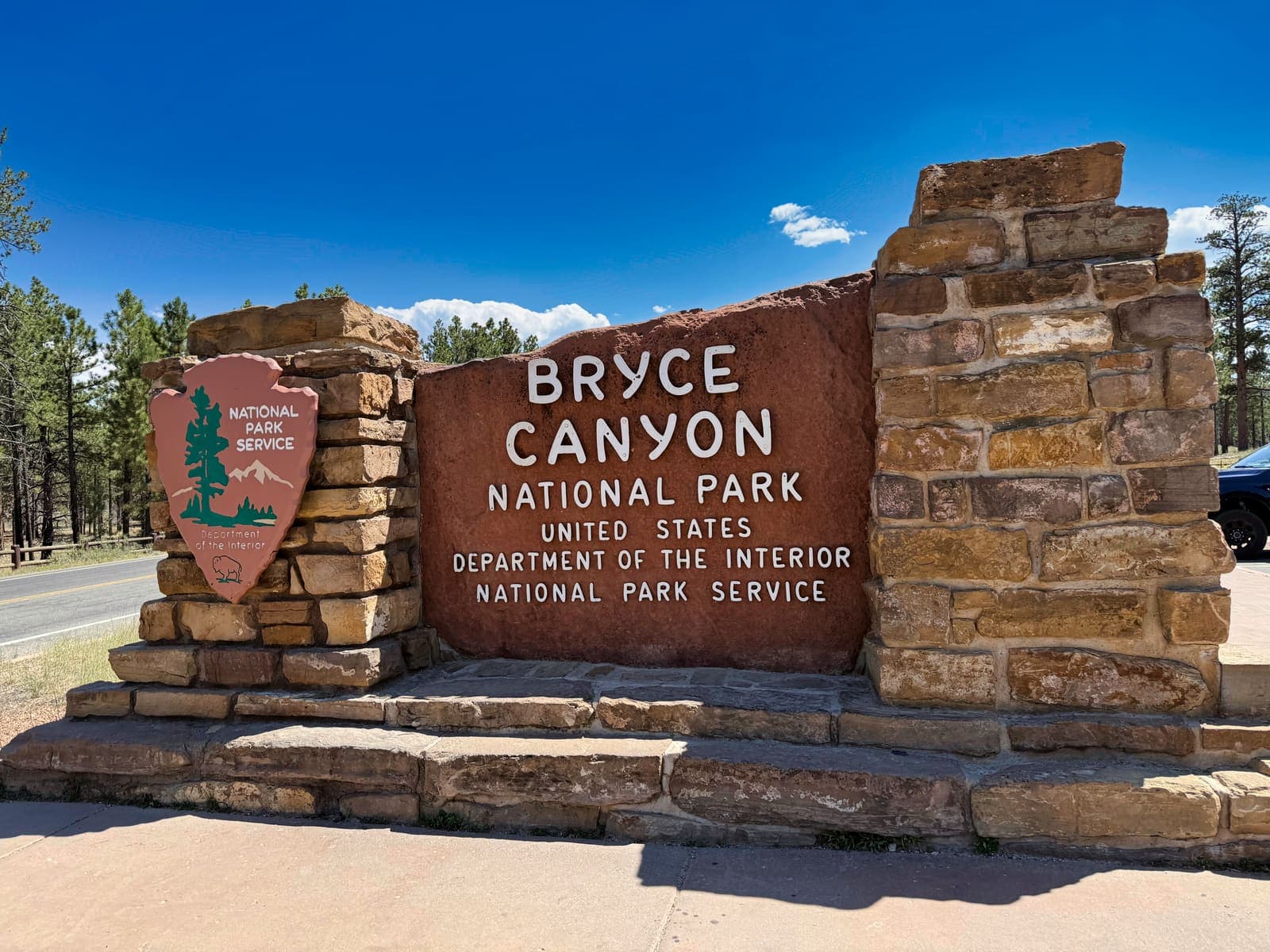
I stood at Sunrise Point in Bryce Canyon on a cool June morning.
The air had bite.
The sky was that cobalt blue you only get at elevation.
And the canyon below me looked like nothing I'd ever seen.
Not a single wall. Not a V-cut river valley.
An amphitheater full of orange and red stone pillars, thousands of them, standing like a crowd frozen mid-breath.
Hoodoos.
Spires shaped like people. Like chess pieces. Like towers. Like something somebody carved on purpose.

I hiked the Navajo Loop that afternoon and walked right through them. Through stone columns wider than me, taller than my Airstream, glowing in the afternoon light.
I stopped at an interpretive sign and read the story.
Bryce doesn't get carved by a river the way most canyons do.
Bryce gets carved by freeze and thaw.
Water seeps into a crack in the rock.
Freezes overnight. Expands. Breaks off a sliver.
Thaws in the morning. Water seeps a little deeper.
Freezes again. Breaks off another sliver.
Over and over and over.
Two hundred nights a year.
For millions of years.
The hoodoos aren't random.
They're the exact record of the same pattern, repeated at a scale I couldn't wrap my head around.
And I had this thought I didn't want to have...
My team is this canyon.
Shaped by whatever I'm repeating, whether I named it or not.
Every hoodoo at Bryce was shaped by the same forces. Your team is being shaped by the same patterns, whether you named them or not.
Sound familiar?
You've done this.
Preached calm under pressure, then sent a Slack message at 11 p.m. with three exclamation points because one deal slipped.
Said you wanted people to disagree with you in meetings, then got visibly tight in the face the last time someone actually did.
Told your team you valued deep work, then scheduled three surprise calls on their block-time Wednesday.
Talked about psychological safety, then made the one person who flagged a problem feel subtly uninvited from the next decision.
Announced at the kickoff that you wanted ownership at every level, then corrected a junior person's call in front of the whole team last Tuesday.
You didn't build the culture you said you wanted.
You built the culture you repeated.
1. Your Team Is Mirroring Patterns You Haven't Named

Here's the part most leaders will not sit with.
Your team is not listening to your values.
Your team is studying your behavior.
They watch what time you send emails.
They watch how you respond when something breaks.
They watch who you interrupt and who you let finish.
They watch what you laugh at and what you go quiet for.
They watch the face you make when a number misses.
And then, without asking permission, they mirror all of it.
I've caught this in my own leadership more than once.
I've watched a direct report start writing emails in the exact cadence I write mine, complete with the same filler phrases I use when I'm avoiding a hard thing.
I've watched a leader I coached start running her 1:1s with the same tempo I run mine, even though that tempo was never what I recommended to her.
I've watched a whole team quietly adopt my Sunday-night-check-in habit after I insisted, loudly, that nobody should be working on Sundays.
The words didn't stick.
The pattern did.
Your team member who never pushes back on you in meetings?
Not timid.
Watching you be the one who never pushes back in front of your boss.
Your new hire who's already working sixty-hour weeks three months in?
Not overeager.
Mirroring the default pace she saw modeled from the day she started.
Your top performer who keeps overpromising?
Not undisciplined.
Copying the version of you who says yes to three things before the first one is finished.
Whatever you have not named, you are teaching.
Whatever you have not named, they are learning.
2. The Culture You Complain About Is the Culture You Modeled

Here's what I had to sit with on the Navajo Loop.
Most leaders complain about culture as if it happened to them.
We've got an ownership problem.
We've got a communication problem.
We've got a speed problem.
We've got a feedback problem.
Every one of those is a we problem for a reason.
You're in the we.
And your patterns are the freeze-thaw.
I've been the leader who stood in front of a room complaining that nobody delivers bad news early, while being the exact person who visibly deflates every time someone delivers bad news early.
I've been the leader who said I want more initiative, while quietly punishing initiative the one time it produced a result I didn't like.
I've been the leader who said we move too slow, while modeling a decision process that required my approval on things that never should have hit my desk.
The culture didn't malfunction.
The culture did exactly what the patterns told it to do.
Your team's cautious behavior that drives you crazy?
Look at what you rewarded last quarter and what you punished.
Your team's tendency to wait for permission before moving?
Look at whose decisions you overturned in the last thirty days, in front of whom, and how publicly.
Your team's avoidance of direct feedback?
Look at the face you make when somebody gives you direct feedback.
The culture you complain about is not a stranger.
It's your reflection wearing different names.
This is the hardest truth in leadership and the most useful one.
Because it means the culture is actually in your hands.
3. Change the Pattern at the Top and the Team Reshapes Around It

This is the one I'd rather not say out loud.
You cannot fix your culture with a workshop.
You cannot fix it with a new values poster.
You cannot fix it with an offsite and a signed commitment and a hashtag.
You fix it by changing the pattern at the top.
One pattern.
Modeled consistently.
For long enough that it carves.
The hoodoos at Bryce weren't carved by one enormous event.
They were carved by one small cycle repeating for millions of nights.
Culture works the same way.
You don't change the team with a speech.
You change it with the next meeting. And the next decision. And the next time you respond to bad news. And the next time someone disagrees with you.
I've had to do this work on myself and it is not glamorous.
Slowing my own response time when something goes wrong so my team stops mirroring my panic.
Choosing to sit with feedback longer than I want to, visibly, so my team sees that receiving it is safe.
Letting silence sit in a meeting instead of filling it, so my team knows pauses are allowed.
Publicly praising the person who brought me a hard problem early, so everybody watching learns what I actually want.
None of that feels heroic.
All of it carves.
Your quieter team member who holds back in strategic conversations?
She'll start speaking up the week you stop rewarding the loudest person in the room.
Your most senior leader who keeps hoarding decisions?
He'll start delegating the week you stop second-guessing his calls in the group chat.
Your newer direct report who apologizes for everything?
She'll stop apologizing the week you stop using a tone that makes apology feel required.
You do not change a team with an email.
You change it by changing the pattern they've been watching for months.
That's what reshapes the canyon.
What It Costs You to Keep Modeling Patterns You Haven't Named
Your team keeps producing behavior you keep complaining about.
Your culture calcifies around habits nobody ever chose out loud.
Your best hires arrive excited and then start mirroring the worst parts of the room.
Your values on the wall become a source of cynicism instead of alignment.
Your team gets quieter because the unspoken rules are stronger than the stated ones.
And you end each year frustrated that the team is acting exactly like you've been teaching them to act.
But when you name the patterns and change the ones that matter?
Your team reshapes faster than you'd expect. Behavior you've been trying to coach for a year shifts in a quarter. Trust deepens because your people feel the congruence between what you say and what you do. The culture on the wall and the culture in the hallway start to match.
Why This Matters

You got into leadership because you wanted to build a team with a culture you'd be proud of.
A place where people did their best work. Where trust was real. Where the hard conversations happened and then people still liked each other afterward.
Somewhere along the way, the culture started taking a shape you didn't recognize.
Not because your team failed you.
Because nobody ever handed you the playbook that says your patterns are the freeze-thaw.
Nobody ever told you the behavior you model at 4 p.m. on a Tuesday is more powerful than anything you said at the offsite in January.
Nobody ever showed you how to audit your own patterns on purpose, name the ones that are carving the wrong shape, and replace them with ones that build what you actually wanted.
This is your Bryce Canyon moment.
The moment you stop blaming the canyon and start examining the water.
The moment you realize the team you're leading is the exact record of what you've been repeating...
And you get to repeat something different starting tomorrow.
Your Bryce Canyon Challenge This Week
Pick one piece of team behavior that frustrates you.
Something chronic. Something you've complained about more than once.
Now ask yourself three questions.
What am I doing, visibly and repeatedly, that could be teaching this? What pattern of mine would my team mirror if they were watching me this week? What is the smallest pattern I could change, starting tomorrow, that would model what I actually want?
Write the answers down.
Then change the pattern.
Not the poster.
Your team is the canyon.
Your patterns are the water.
Start carving on purpose.
You don't need a new personality.You need to see the pattern.
If this note showed you a pattern you recognize, Clarity First is where you learn to catch it before it fires.
See Clarity First

Founder, Lead Differently
The Lead Differently movement. For leaders who got the position without the playbook. Built around how you're actually wired.